
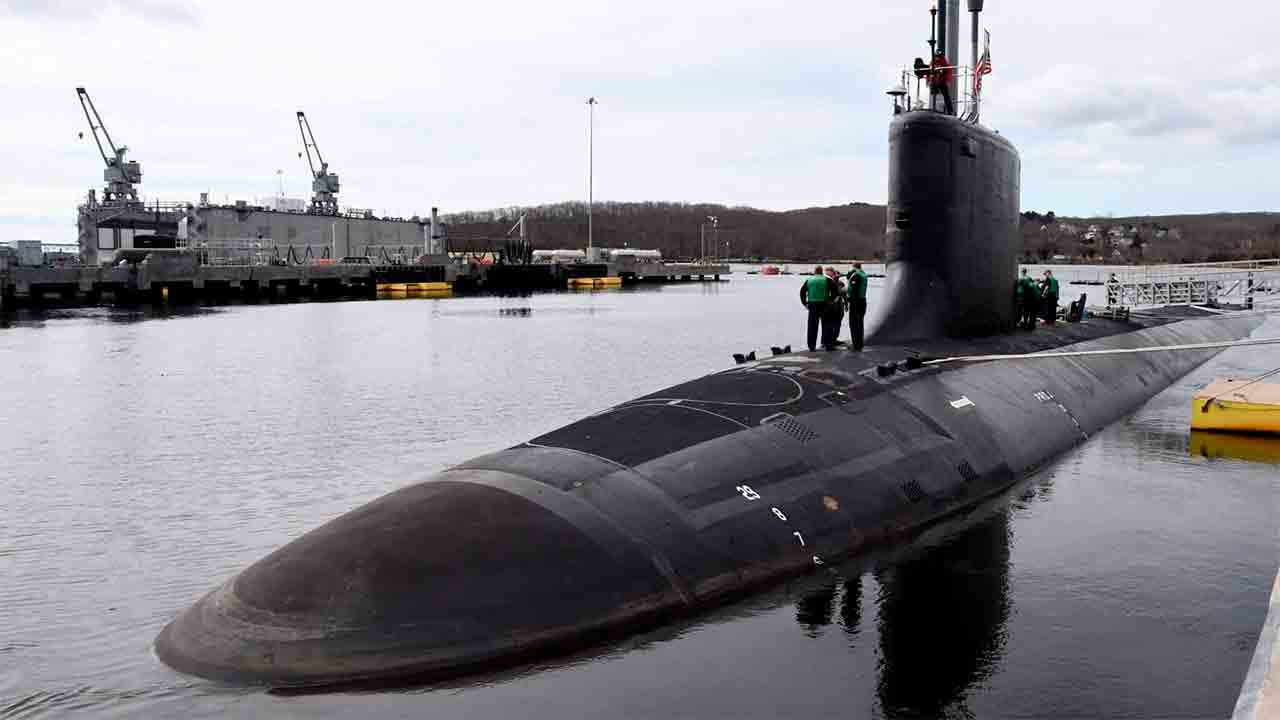
The Virginia-class fast attack submarine USS Delaware (SSN 791) successfully carried out a pioneering mission by launching and recovering an Unmanned Underwater Vehicle (UUV) through its torpedo tube while submerged, without diver assistance.
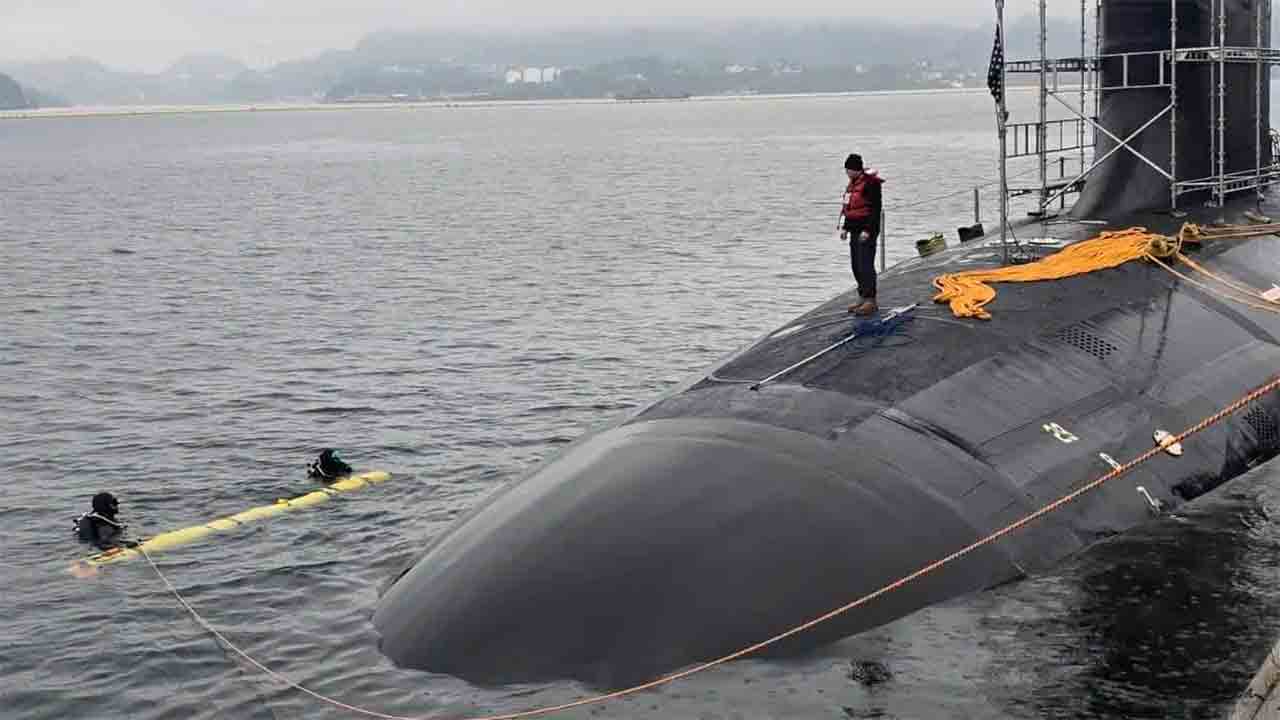
The operation took place within the U.S. European Command (EUCOM) area of responsibility and involved the underwater drone Yellow Moray, a modified variant of the REMUS 600. The mission consisted of three autonomous sorties lasting between 6 and 10 hours, carried out entirely underwater.
+ Embraer opens subsidiary in India to boost defense, aviation, and services
The Yellow Moray is designed for critical roles such as mine countermeasures, seabed mapping, surveillance, reconnaissance, and hydrographic surveys. According to the Navy, the mission’s success validates the reliability and effectiveness of integrating unmanned systems into tactical submarine operations, marking a significant advancement in undersea warfare.
Technical and strategic capabilities
Commissioned in 2020, the USS Delaware is the 18th Virginia-class submarine and part of Block III. It measures 115 meters in length and displaces about 7,800 tons submerged. Its armament includes 12 vertical launch tubes for Tomahawk cruise missiles and four 533 mm torpedo tubes for Mk 48 ADCAP torpedoes. The submarine is also equipped with advanced sensors such as the AN/BQQ-10 sonar and Large Aperture Bow (LAB) array, and is optimized for special operations.
The Yellow Moray measures 3.25 meters in length, weighs about 240 kg, and can operate at depths up to 600 meters. It is equipped with synthetic aperture sonar, CTD sensors, and inertial navigation, allowing it to operate in GPS-denied environments, including areas inaccessible to traditional platforms.
Strategic milestone for the submarine fleet
The U.S. Navy states that integrating UUVs like the Yellow Moray expands the range of submarine missions, enables operations in high-risk zones without personnel exposure, and accelerates the pace of operations. Launching through a torpedo tube eliminates the need to surface, preserving the vessel’s stealth.
Vice Admiral Rob Gaucher, Commander of Submarine Forces, emphasized that adopting autonomous systems not only reduces human risk but also enables more distributed sensing in complex environments. He confirmed that the Navy plans to expand these capabilities fleet-wide.
Innovation after logistical challenge
The operation is even more notable considering a previous test failure in a Norwegian fjord in February, when equipment damage prevented the UUV’s recovery. After repairs in the U.S., the drone was redeployed to the European theater, and USS Delaware successfully performed an expeditionary recharge, including the first diver-assisted recharge at a Norwegian pier.
With this successful mission, the U.S. sets a new standard in the use of autonomous underwater vehicles, marking a key step toward a more flexible, autonomous, and lethal submarine force in the 21st century.
Source: U.S. Submarine Forces Command | Photos: US Navy | This content was created with the help of AI and reviewed by the editorial team.
